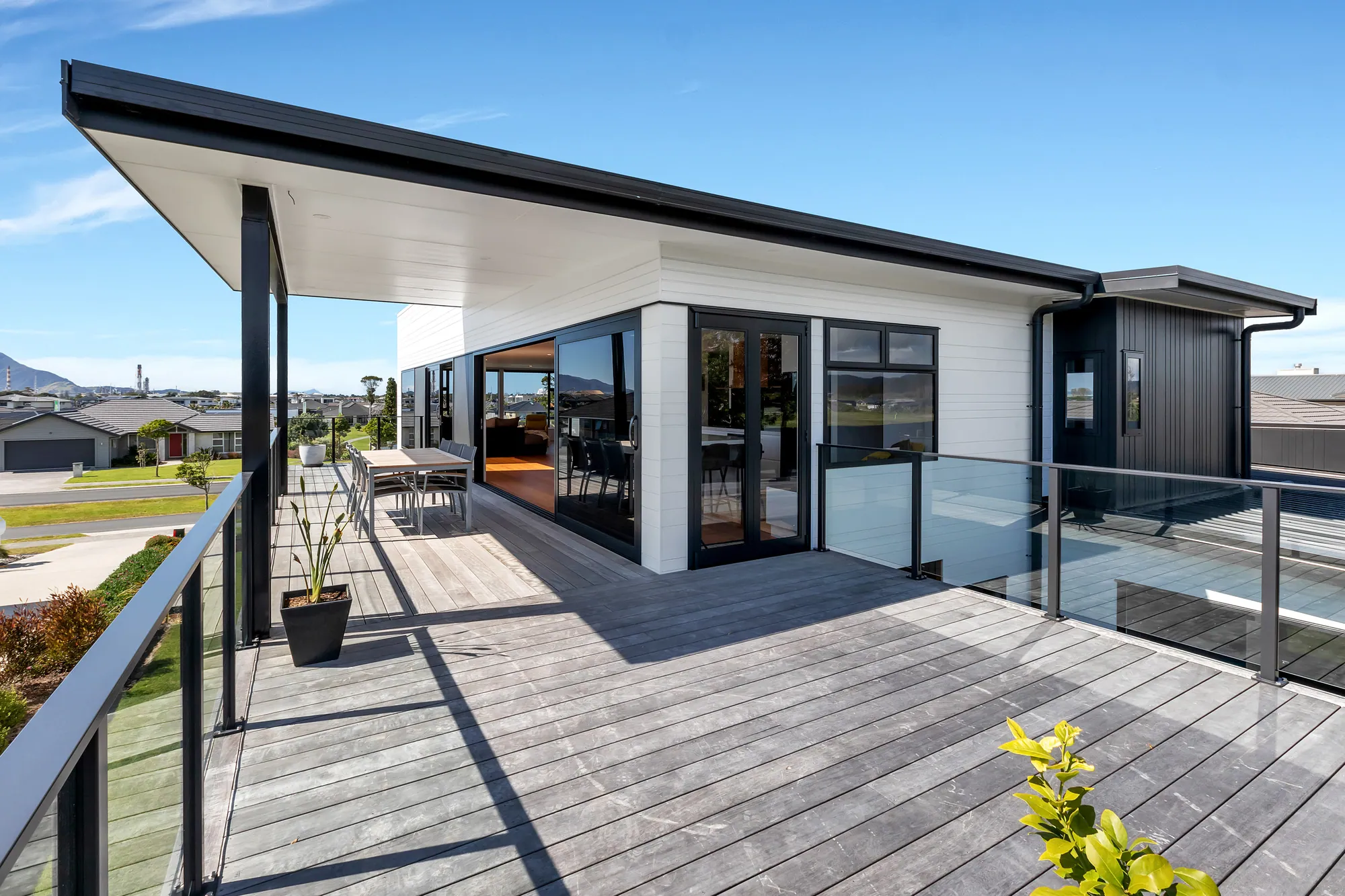
A coastal site in Northland is a harder building environment than most people expect. Salt arrives on the wind and settles on everything, including surfaces rain never reaches. Add wind-driven rain off the water and long hours of hard UV, and materials that would be perfectly sensible twenty minutes inland start working much harder.
None of that argues against building on the coast. It argues for making the material decisions early, because most of them are very hard to reverse once the house is closed in.
Start with the exposure, not the catalogue
Before anyone talks about cladding profiles, get clear on how exposed the site actually is.
Corrosion exposure zones are worked out from distance to breaking surf, the prevailing wind, and how much shelter sits between house and water. A canal frontage, an open coastal ridge and a sheltered pocket a few hundred metres inland can land in different zones in the same district. Wind zone is assessed separately, and drives bracing, glazing and fixing decisions.
These are site-by-site assessments, not suburb-wide rules of thumb, so have yours done properly. Everything downstream follows from it: the grade of steel in your fixings, your coating system, your flashing details. The Building Code also sets minimum durability periods according to how hard an element is to get at, and anything buried in a wall sits at the demanding end of that scale.
Cladding, and giving the wall a way to dry
On an exposed site, cladding is a rain screen rather than a seal. Water will get past the face of it — driven up under laps, around joinery, through any junction that moves. What matters is that it has a path back out and the framing behind it can dry.
That is the job of a drained and vented cavity, and on a coastal build it is worth having whether or not the cladding could be direct-fixed. The battens, the base vent and the head flashings are not detail for its own sake. They are the difference between a wall that dries and a wall that stays damp.
Material choice matters less than people think, provided the detailing is right. Timber, fibre cement, metal and plaster systems can all work on the coast. What separates them is the maintenance and recoating cycle each one signs you up for, and that is worth knowing before you choose. Use the correct treatment level for exterior timber — a higher hazard class above ground, higher again in contact with the ground — and keep lower-grade offcuts out of external work.
Joinery, fixings and hardware
This is where cost-cutting shows up first.
Aluminium joinery is standard here; the coating on it is not. Near salt air, specify a marine-grade or high-durability powder coat, or anodised, and make sure sill drainage is detailed and left clear.
Fixings are the ones to be firm about. Standard stainless is not marine-grade stainless: the marine grades contain molybdenum, which is what buys the extra corrosion resistance in salt. Even then, exposed stainless can tea-stain if it is never washed, and galvanised fixings that would last decades inland can bleed rust down a coastal wall.
Watch dissimilar metals too. Two different metals in contact, or runoff from one washing over another, sets up galvanic corrosion and eats the weaker of the pair. It shows up as staining long before anyone works out the cause.
Then the hardware nobody specifies carefully: hinges, sliding door rollers, garage door tracks and springs, gutter brackets, balustrade fittings. All of it lives in the same salt.
What the cheap specification actually costs
The fixing costs a few dollars. The access costs thousands.
Replacing corroded fixings, failed joinery or a stained cladding run on a two-storey seaward elevation means scaffold, trades, and often opening up work that was sound. The saving made at specification never survives the first repair.
So spend where replacement means scaffold or stripping cladding: fixings, flashings, joinery, anything inside the wall. Save where you like on what can be unscrewed and swapped from ground level.
The maintenance a coastal home actually needs
Wash the exterior down with fresh water regularly, and more often on the seaward face. Pay attention to the sheltered areas rain never rinses: under eaves, soffits, window reveals, the underside of decks and balconies. That is where salt concentrates.
Keep joinery drainage clear. Check flashings, seals and sealant joints once a year. Recoat on the coating's cycle rather than waiting until it looks tired. Clear the gutters, keep ground clearances, and keep planting off the cladding.
Read what your coating and hardware cover is conditional on, because regular cleaning is usually part of it.
None of it is difficult. It just has to be a programme rather than a reaction.